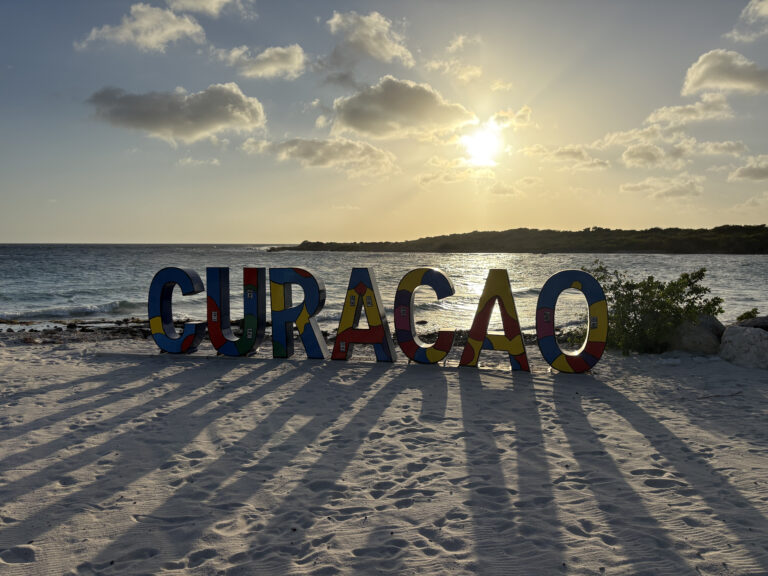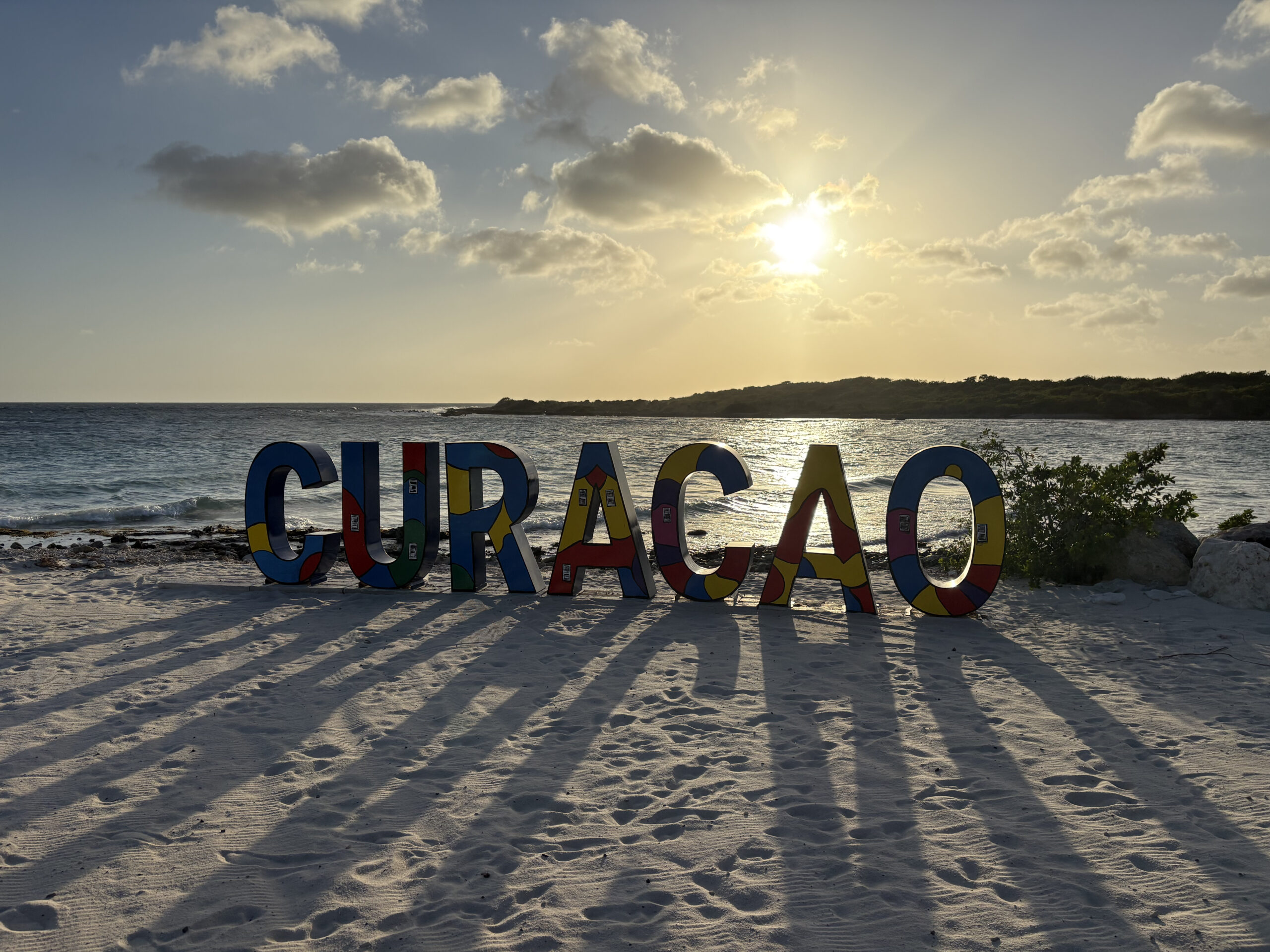
After our long and adventurous day of hiking, we chose to sleep and relax, enjoy the laid-back atmosphere of the resort, listen to the waves, and watch the sun go down around us. The next day held an adventure as we booked an all-day private tour of the island with Christina and her Discover Curaçao Tours.
Christina was a delight to have taking us around the island, and a wealth of information, as we didn’t want to just see the sites but also learn about the history and culture. One of the most striking things we learned early on was Curaçao was not a tourism-based economy but one based on oil and industry, as being a Dutch colony, it was a base of refining operations for the Shell Corporation. While other islands work the tourism trade, Curaçao sets itself apart, and in turn, its people have a higher standard of living and prosperity.
As we worked our way through the city of Willemstad, learning as we went, we came upon a natural habitat of pink flamingos, but not your average flamingos but wild Caribbean flamingos, traveling between islands such as Bonaire and the South American coast in search of food and safe waters. They come to this peaceful lagoon in Curaçao to feed on tiny shrimp and algae, which give their feathers their beautiful pink color. They fed all while many stopped to take photos, without a care in the world.
As we continued west, we passed through Sint Willibrordus, known to most as Williwood, complete with a sign along a small hill mimicking their California counterpart. Some folks at Marfa’s Good Hangout thought this would be a cool idea, and it seems it worked as many now call this place by its nickname instead. Love it.
We stopped by a beautiful old Catholic church built in the mid-1800s and still being used today. Often seen as a center of the area, it stands majestically on a small hill overlooking all those that live around it. Very well preserved and decorated with only some modern fans inside to give those attending mass a little fresh air in the hotter times.
Next up was a small beach known mostly to locals, situated in a peaceful cove and perfect for snorkeling. We had the gear and were ready to enjoy it, but wild sea turtles were more fun to watch and try to capture on video. Such neat creatures gliding around underwater, living their lives. A pelican joined in the mix as well, as it worked on its lunch by keeping a sharp eye on fish it could grab.
Arriving into Shete Boka National Park, we really didn’t know what to expect, but quickly learned “boka” means inlet, and these are unique. With the force of North Atlantic Ocean waves crashing into the inlets, the results are awesome blasts of foaming seawater shooting high into the air. The more wind, the harder the waves crash, and higher the blast. Really awesome sight to see.
Also part of the park was a partial cave area. We worked our way down a passageway to see water crashing in underneath. Another boka there was a natural bridge being carved out of the landscape by the power and unrelenting force of the ocean.
Just around the corner of the island, the sea was calm, with similar cliffs, but smooth and clear water with beaches gently sloping into the water. Such a contrast to the violence seen just a couple of miles around the corner of the island.
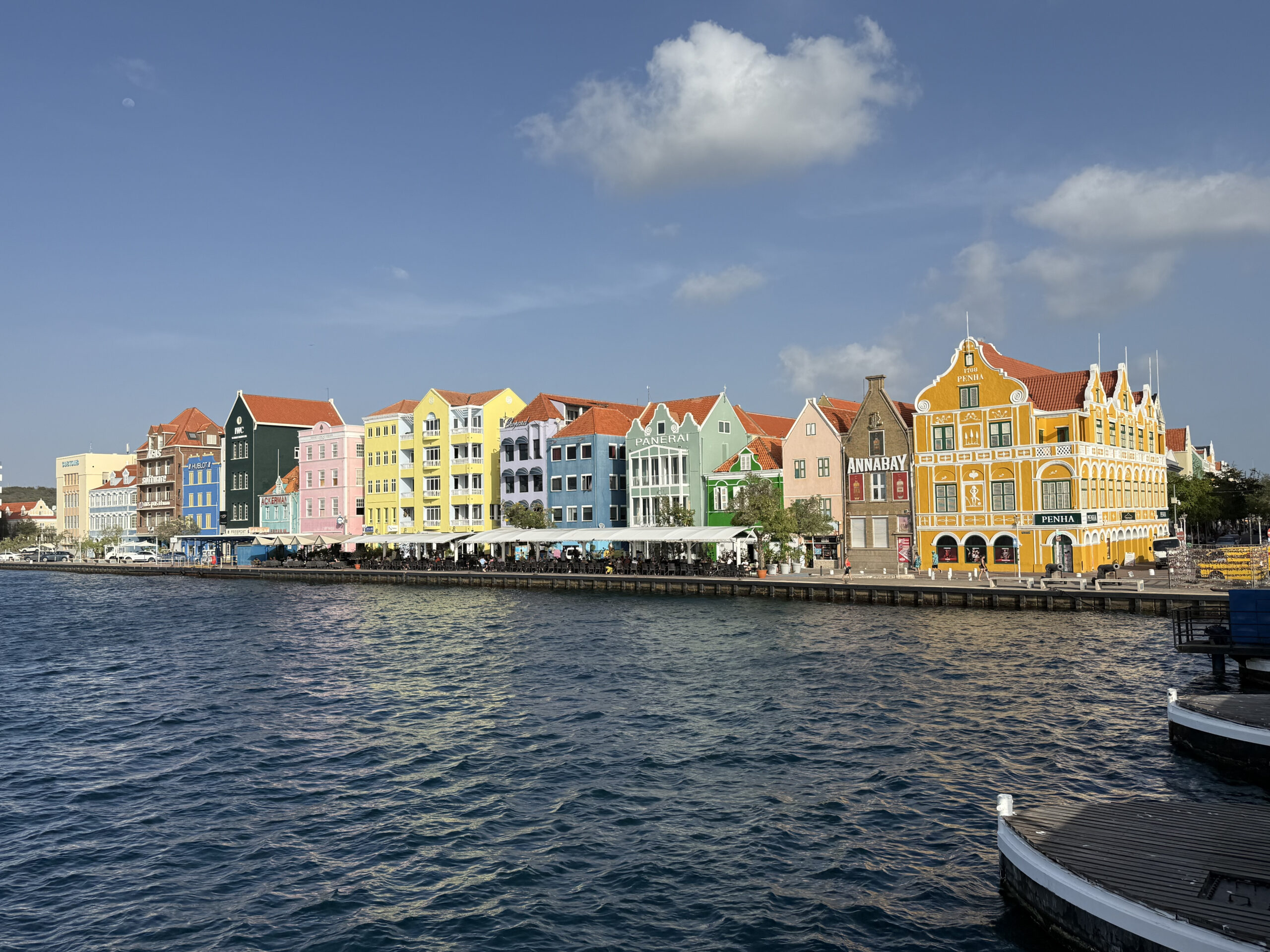
We made our way back to Willenstad to spend some time downtown. So many parts stuck out, from its revitalization with art to the history being preserved with the renovation of old buildings. The city loves its colors, and it shows with its colorful art. Preservation can be seen around almost every corner, as well as its Dutch heritage. Of course, an afternoon snack consisting of a stroop waffle and coffee, yum.
Afterward, we were able to see a top-down view of the city, then descend into the other side and explore even more. Willemstad, as a port city, has a unique and largest of its kind in this hemisphere: a floating bridge. Yes, floating, and it was even used as a main road until a large bridge was built to span the port in the late 1970s. Since then, the floating bridge stays and it is used by bikes and pedestrians alike to move from one side of the city to the other.
The day would not have been complete without more pictures. Especially cool was the DUSHI sign, meaning sweet, nice, good, tasty, or pleasant in the native Papiamentu language. It is used most often as a term of endearment for people, and once we learned this, we realized we heard it often but just didn’t know it before. So awesome.
On our last full day, we spent more time relaxing and soaking in every last inch of the sunset. I don’t think there was a bad one all week; such beautiful and clear weather to enjoy this slice of paradise. After a shortened morning, we headed out to the airport today for our trek home via Miami, but not before showing our sad face disapproval of having to leave.
Full album of pictures: https://photos.destinationsawait.com/Curacao-Part-Two
Discover more from Destinations Await
Subscribe to get the latest posts sent to your email.